
Objectives
- Replace obsolete dryer without extended plant shutdown
- Improve thermal efficiency
- Lower maintenance requirements
- Achieve more consistent production
Project Overview
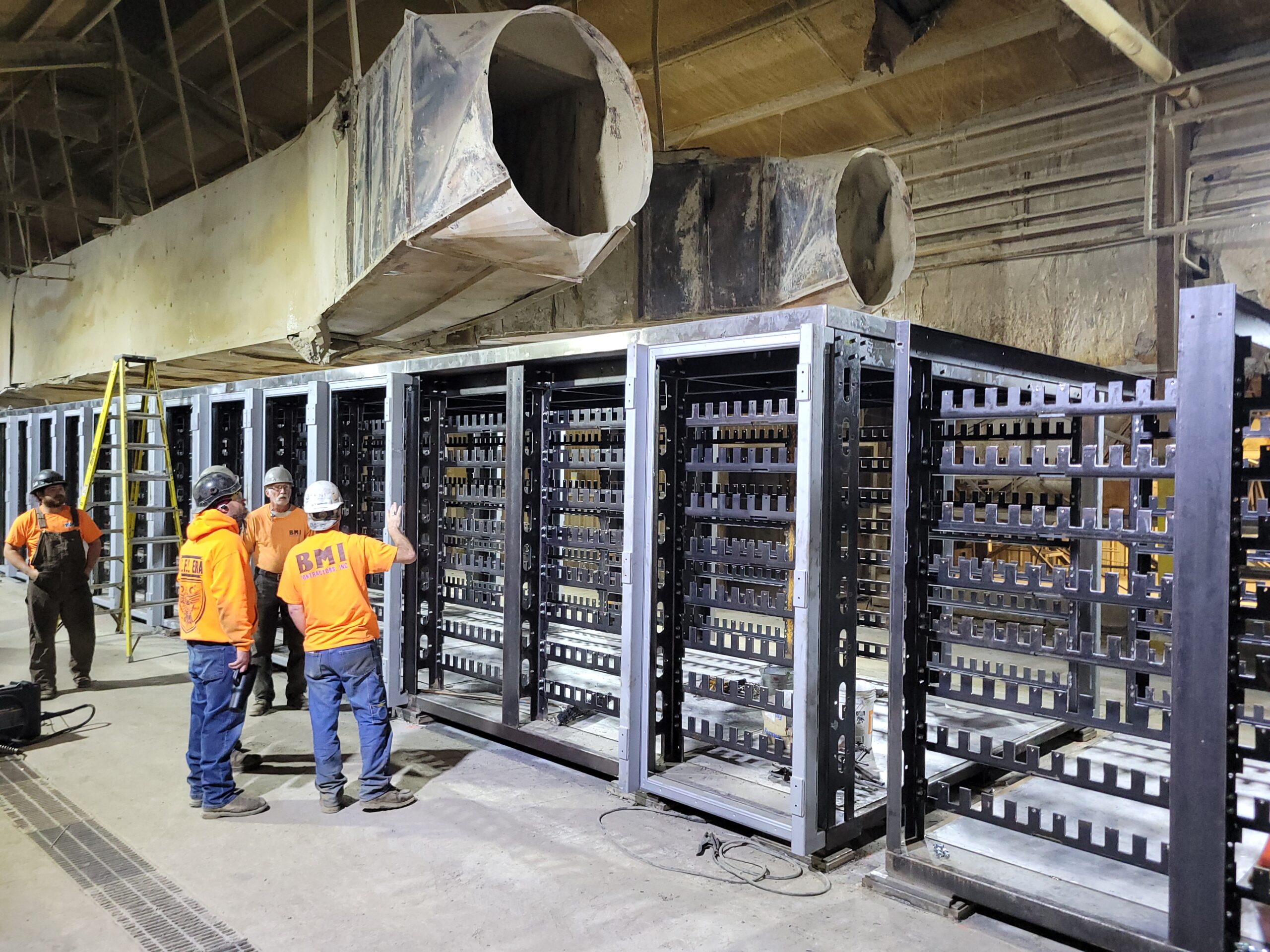
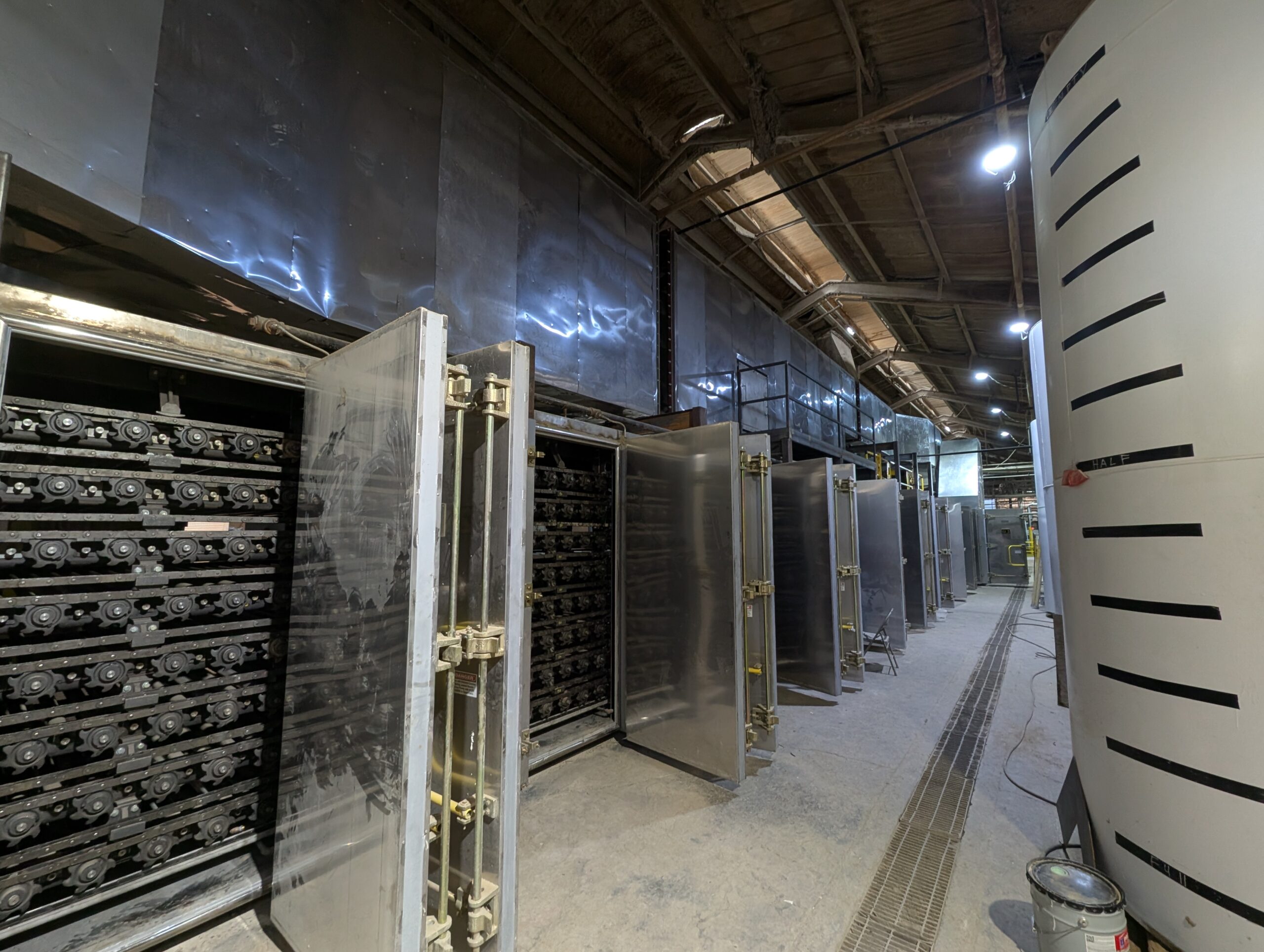
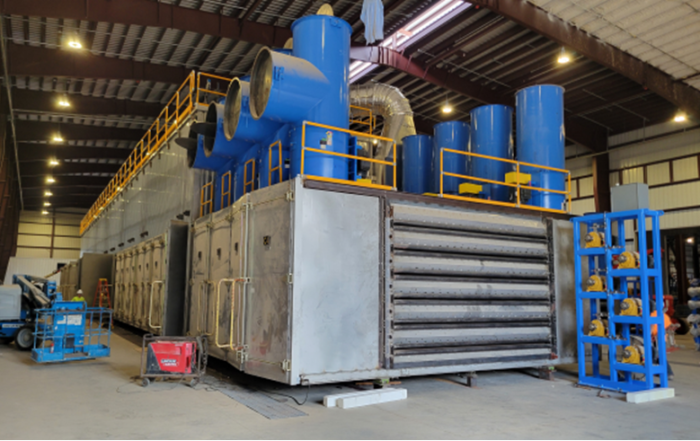
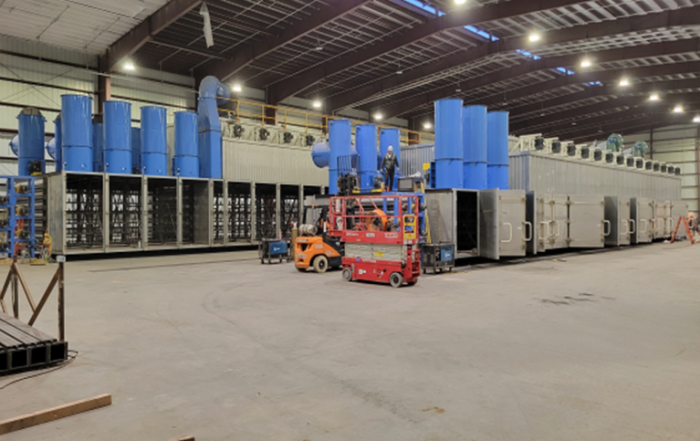
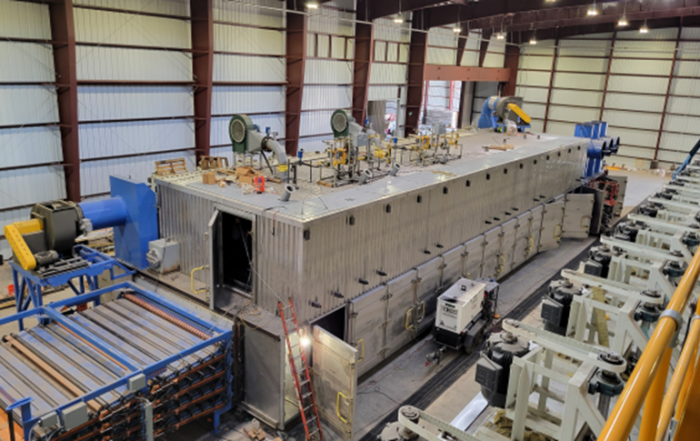
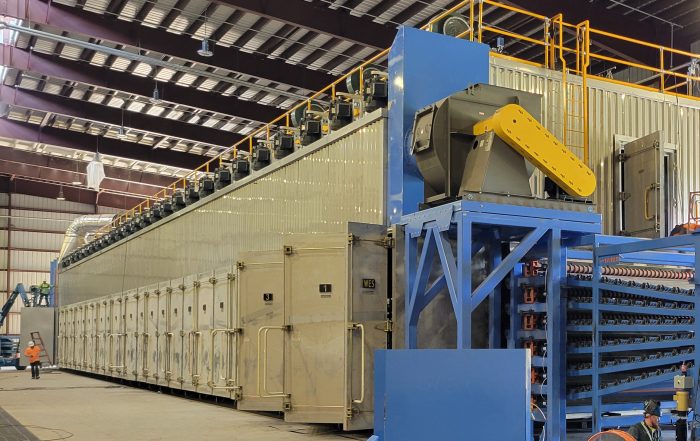
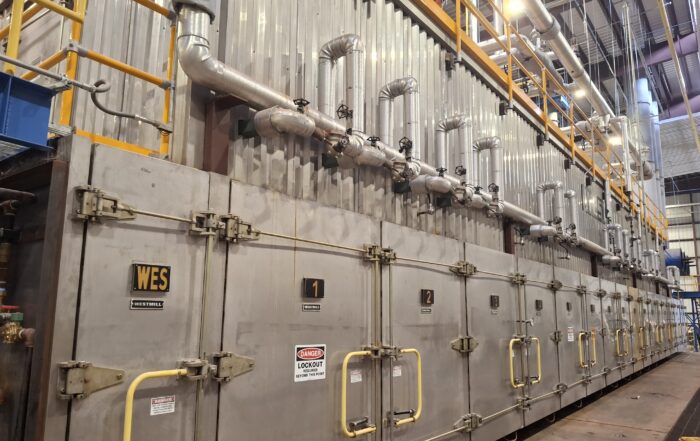
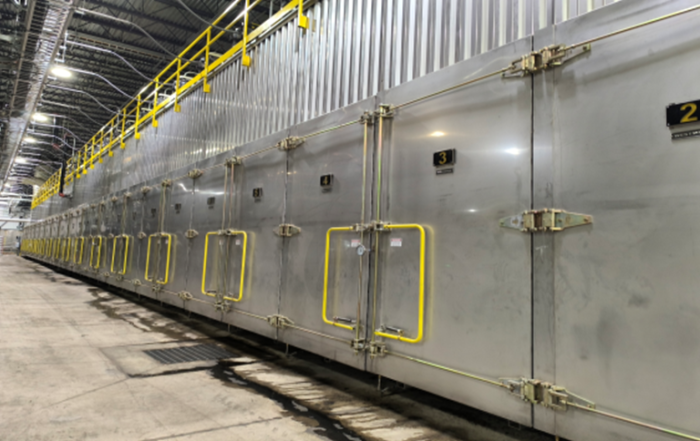
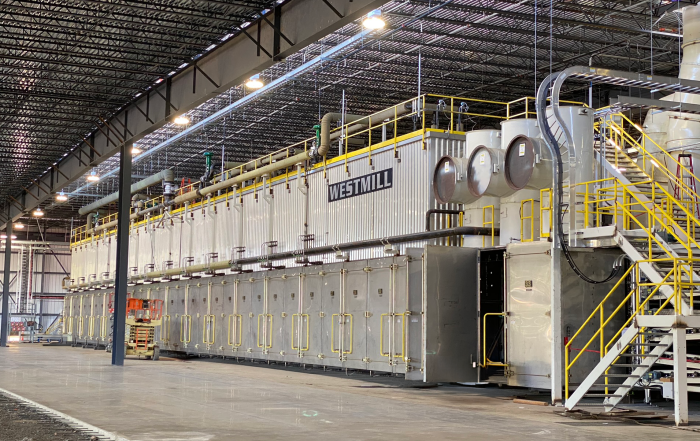
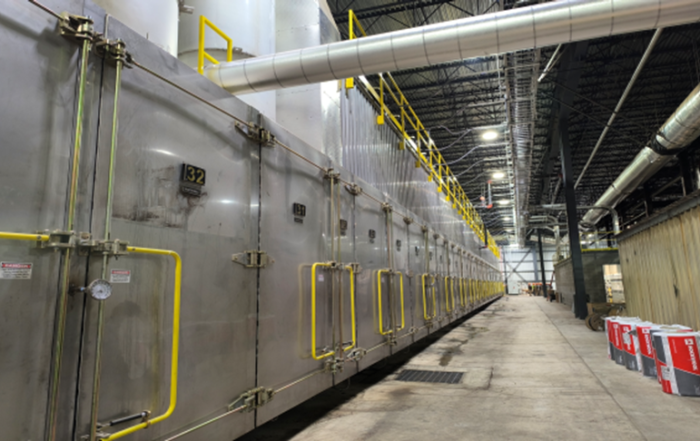
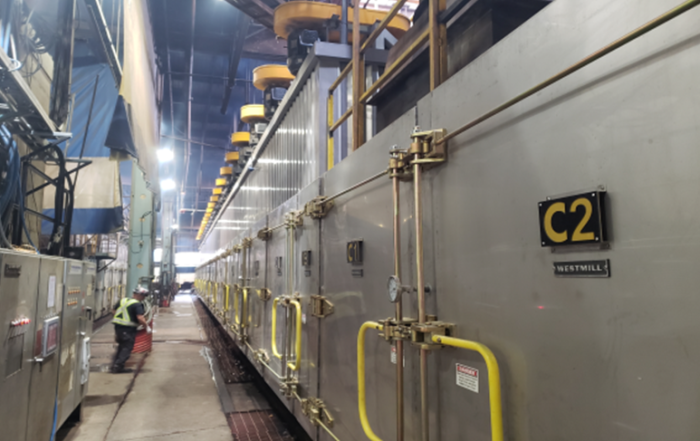
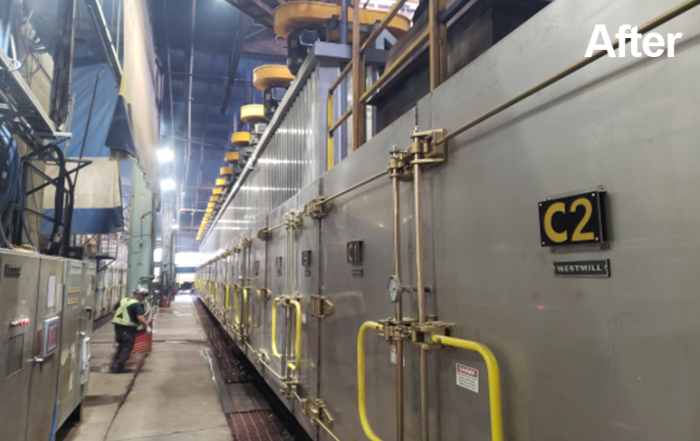
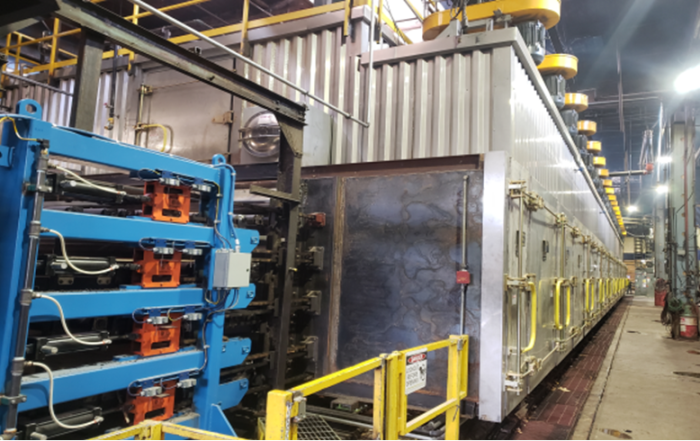
Huebert Fiberboard, a fiberboard manufacturer in Booneville, MO, replaced a 65-year-old board dryer that had become inefficient, maintenance-intensive, and a major constraint on production. The new board drying system by Westmill Industries, introduced modern insulation, an upgraded heating approach, and advanced controls—all while integrating into the plant’s existing production lines.
Existing Condition
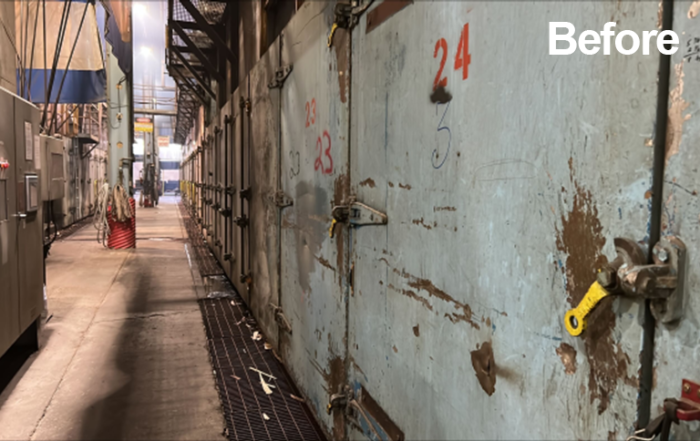
The legacy dryer suffered from significant heat loss due to structural gaps, poor insulation, uneven airflow, and an outdated heating system. Spare parts were difficult to source, and manual controls limited process optimization. The dryer had been physically attached to the plant floor, without the ability to expand and contract unimpeded, resulting in warped conveying components which created a bottleneck, reducing throughput and causing variability in board quality.
Design & Upgrade Strategy
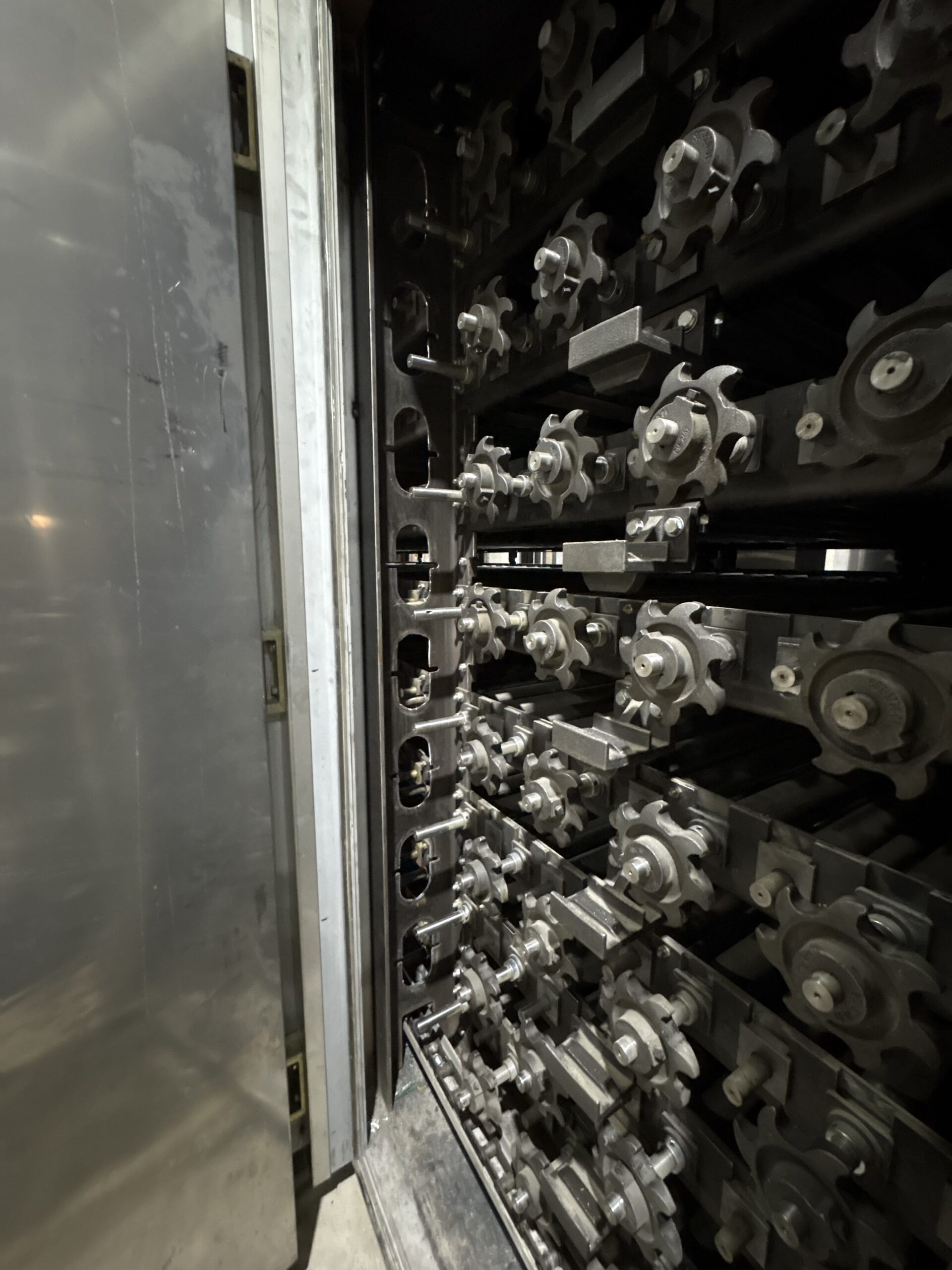
The strategy focused on minimizing structural changes while maximizing performance gains. The engineering team at Westmill worked to adapt the company’s technologies to suit the Huebert Team’s wish list of preferred legacy processes. Westmill also significantly improved the process of maintenance part removal and replacement.
Key Elements Included
- Footprint Compatibility
The new dryer was engineered to fit largely within the existing dryer’s footprint. - Enhanced Insulation
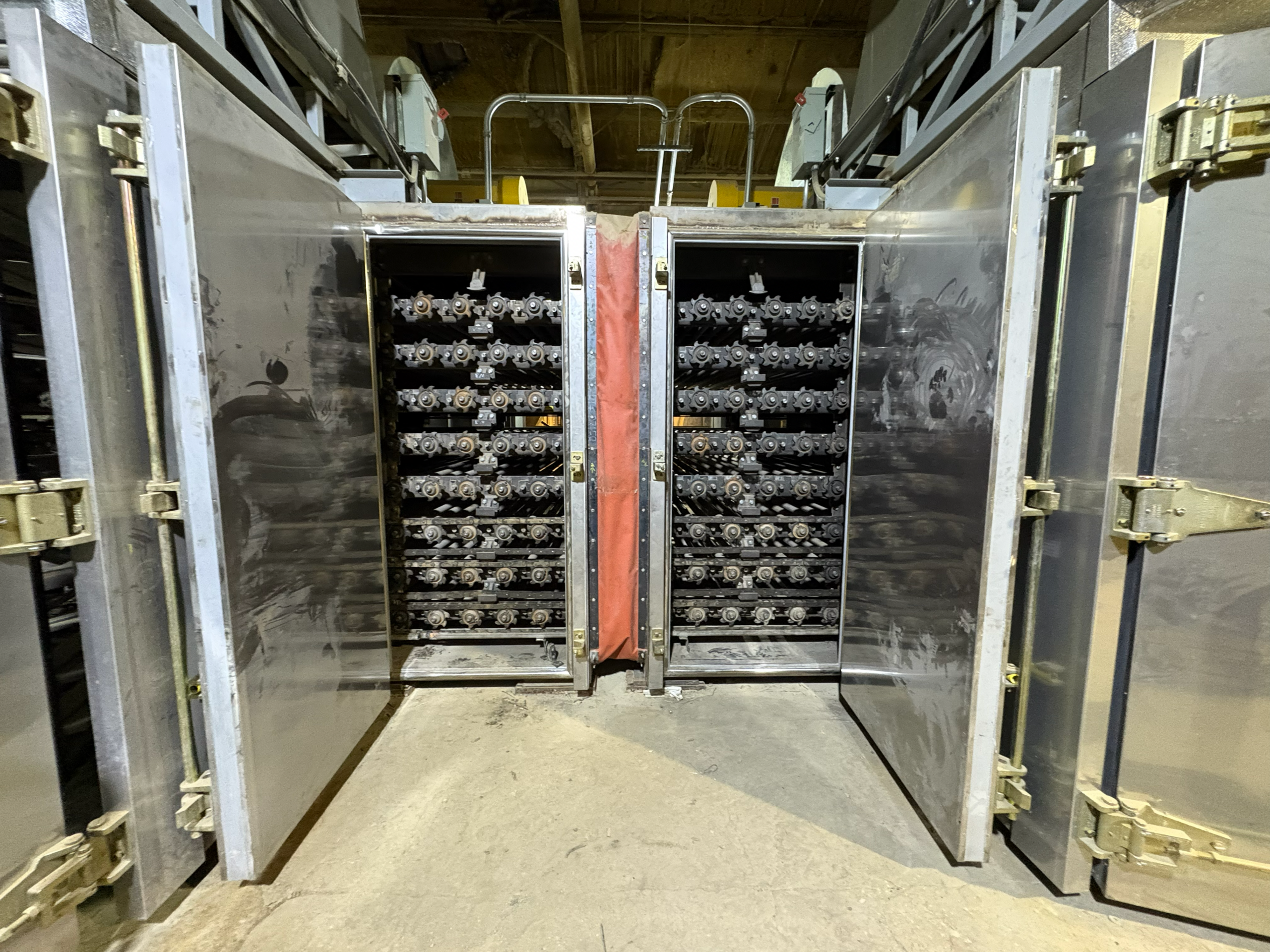
High-performance insulated roof, floor and state-of-the-art dryer doors replaced the old steel shell. - Upgraded Heating System
Incorporated a modern high-efficiency gas burner system. - Advanced Control Integration
A new PLC-based control system with user friendly HMI was installed. - Airflow Optimization
Redesigned internal airflow systems ensured uniform drying across all board surfaces.
Challenges & Solutions
Challenge: Limited Shutdown window
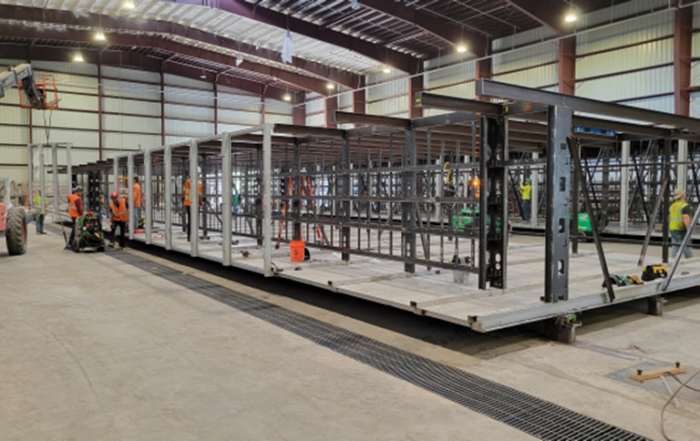
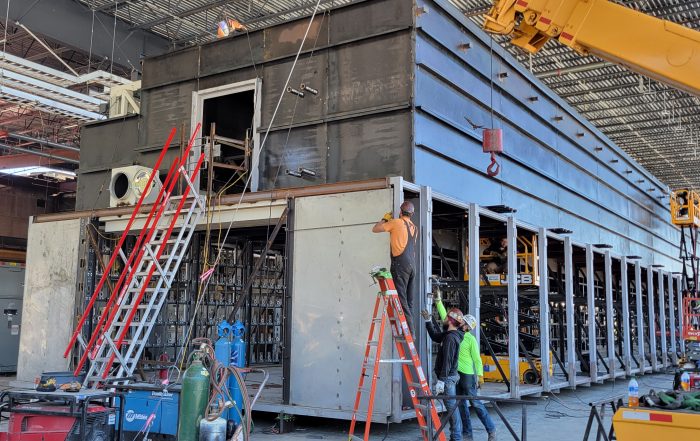
Solutions: Used modular installation and pre-assembled components to accelerate the replacement process
Challenge: Integrating modern controls with legacy systems
Solutions: Implemented communication gateway for seamless data exchange
Challenge: Operator transition from manual to automated system
Solutions: Provided hands-on training and staged automation rollout
Results & Feedback
- Overall plant throughput increased by 10% by eliminating the dryer bottleneck
* Can be improved by replacing existing infeed/outfeed equipment - Water usage significantly reduced
Eliminated the need to manually water the inside of the dryer to prevent fires, removing a routine maintenance task required previously. - Improved thermal containment
The new dryer keeps heat inside where it belongs. The old unit was so leaky, it inadvertently heated the plant – an issue noticed over the winter when asphalt additive tanks began thickening, no longer warmed by the dryer heat loss
The Bottom Line
Replacing the aging dryer with modern technology delivered substantial operational and financial benefits. By focusing on insulation, efficient heating, and intelligent controls, the plant transformed a critical weakness into a high-performance asset—demonstrating the value of targeted equipment upgrades in mature industrial facilities.